


Read time: 7 minutes.
In this edition of the Loophole:
Laws that affect business owners in 2025
Business Owner’s 2025 Wrapped
Friends, it’s still 2025
I don’t appreciate Spotify’s unwrapped coming out at the beginning of December…I want all my giftwrapping soundtracks to count too!
It’s still December, so technically still 2025, and I refuse to cut my year short by closing the chapter of potential too early. Given my firm opinion, I’ll share my personal year-in-review as my last post of 2025, where it belongs.
I will, however, share Canada’s 2025 in review (because Canadians are collectively coasting until the New Year) and a Canadian Business Owner’s 2025 Wrapped.
Founder’s Legal Wrapped: Canada 2025
Running a business in Canada means keeping up with changing rules—and 2025 brought plenty of them. From paperless CRA to tougher consumer protection, here’s what you need to know to stay compliant and competitive.
📧 CRA Is Going Digital-First for Business Mail
The CRA made online mail the default for most business correspondence in 2025. If you haven’t updated your email address in your My Business Account, you risk missing important notices about audits, assessments, or payment deadlines.
Action item: Log into your CRA My Business Account and confirm your email address is current. Paper mail is becoming the exception, not the rule. Missing a deadline because you didn’t get a notice won’t be accepted as an excuse if your contact info was outdated.
Learn more: CRA My Business Account
⚖️ Your Marketing and Pricing Can Now Be Challenged More Easily
Changes to the Competition Act allow private parties to sue for deceptive marketing and certain anti-competitive conduct as of June 20, 2025. This means your ads, pricing, “limited time” offers, and environmental claims are more likely to be questioned—not just by regulators but by competitors and consumers.
What this means for you: If your marketing is confusing or uses fine print that changes the real price at checkout, it may be treated as misleading. On the flip side, if a bigger player is harming your business with shady tactics, there are now stronger tools to push back.
Learn more: Competition Bureau bulletin on new private access rules
📝 Consumer Law Is Getting Tougher on Subscriptions and Long-Term Contracts
Quebec and British Columbia both strengthened their consumer protection laws in 2025, especially around fines and contract terms. If you sell subscriptions, memberships, or long-term services to individuals, you need to be very clear about pricing, renewals, and cancellations.
What to watch: Hidden fees, hard-to-cancel subscriptions, or “gotcha” clauses are more likely to trigger penalties or complaints, especially if you have customers in Quebec or BC. Using one generic set of terms across Canada without thinking about provincial rules is now much riskier.
Learn more: Stikeman overview of Quebec’s new penalties and fines
™️ Trademarks Now Reward Real Use of Your Brand, Not Just Paperwork
On April 1, 2025, new trademark rules came into force that make actual use of your mark more important. If you register a brand name or logo but never really use it in Canada, you’ll have a harder time enforcing it in the early years.
The upside: Disputes at the Trademarks Office are more structured and can come with cost awards, so they’re less casual than before. It’s also easier to clear out old “zombie” marks that were blocking newer brands.
Learn more: Osler summary of 2025 Canadian trademark changes
🤖 AI Tools Are Covered by Privacy Rules—Even Without a Canadian AI Law
Canada still doesn’t have a stand-alone AI law, so regulators are using existing privacy law to control how you use AI. If you plug customer data into chatbots, recommendation tools, or other AI systems, you’re still fully responsible for consent, security, and transparency.
What you need to know: The privacy regulator has published clear guidance on what it expects from businesses that use AI, including limits on uses of personal information. If you serve clients in the EU, the EU AI Act may also apply to your product or service—even if you’re based in Canada.
Learn more: Office of the Privacy Commissioner page on AI and privacy
🏢 Ownership of Your Company Is More Visible to Banks and Regulators
Canada’s public beneficial ownership registry and new anti-money-laundering rules made it easier to see who really owns and controls corporations. If you run a corporation, banks and government agencies care more than ever about who actually sits behind the shares, not just the company name.
Action item: Sloppy or outdated ownership records can delay account openings, financing, or due diligence for investors or partners. Keeping your shareholder and ownership records current is now a basic risk-management task, not a nice-to-have.
Learn more: Finance Canada update on strengthening Canada’s anti-money-laundering framework
📈 Capital Gains Inclusion Rate Changed (And It Still Matters)
Starting June 25, 2024, the capital gains inclusion rate increased for gains over $250,000 annually. If you’re planning to sell business assets, real estate, or shares in your corporation, this affects how much tax you’ll pay on the profit.
What you need to know: The first $250,000 of capital gains each year for individuals still uses the lower inclusion rate, but anything above that is taxed at a higher rate. This matters for business owners planning exits, corporate reorganizations, or asset sales. If you have significant gains coming, timing and structure matter more than ever.
Learn more: CRA guide on capital gains
What’s Next for 2026?
These changes reflect a broader trend: regulators are making it easier to challenge bad actors while raising the bar for transparency and consumer protection. The businesses that will thrive are those that treat compliance as a competitive advantage, not a checkbox.
Need help navigating any of these changes? Book a discovery call, and the cost goes towards the legal services you need.

Now let’s have a little fun.
Spotify Wrapped pegged me as a 71-year-old man this year. Guess that’s what happens when you fall down the poetic-beatnik-jazz-psychedelic-bluegrass-rock rabbit hole and never crawl back out. Frankly? Goals. I’m out here actively stealing the vibes from my retired parents’ Florida lanai, and I’ve never felt more alive, man.
My Spotify Wrapped made me wonder if there were a 2025 Business Owner Wrapped, what would it say? So I made one. Is it relatable?
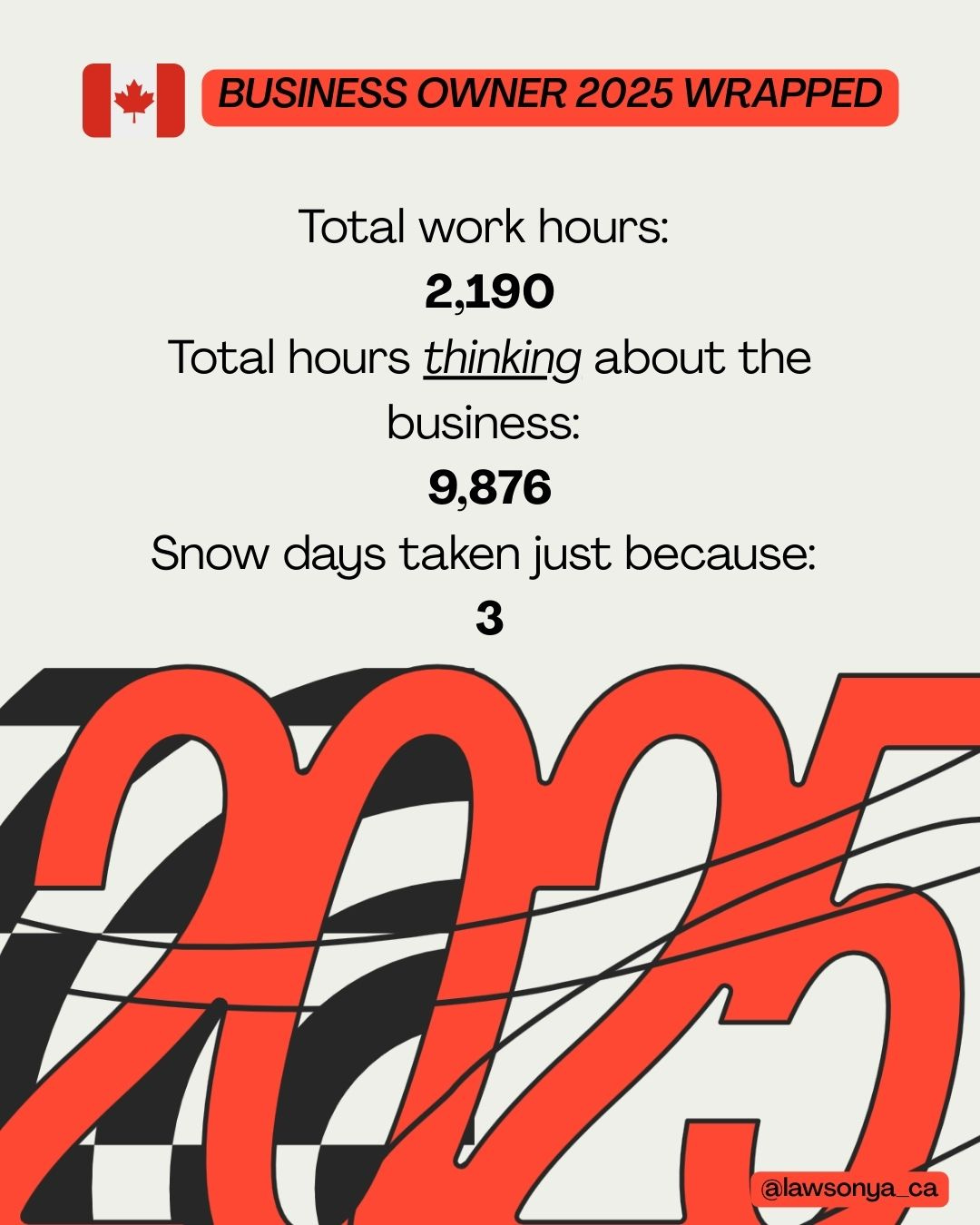
Regular year → 8,760 hours
Entrepreneur’s year → 9,876 hours
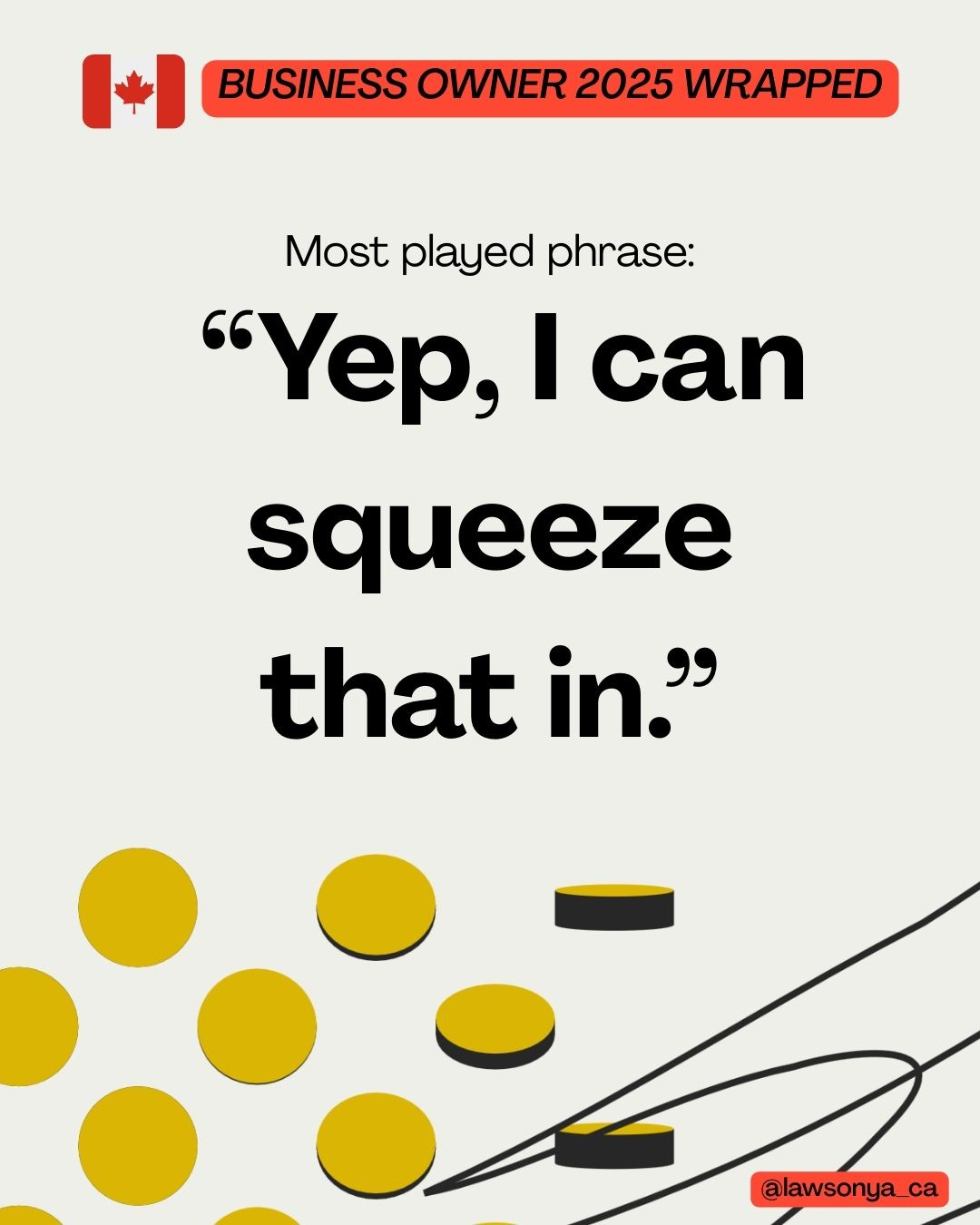
Second most played phrase: “I really should hire someone to do this.”
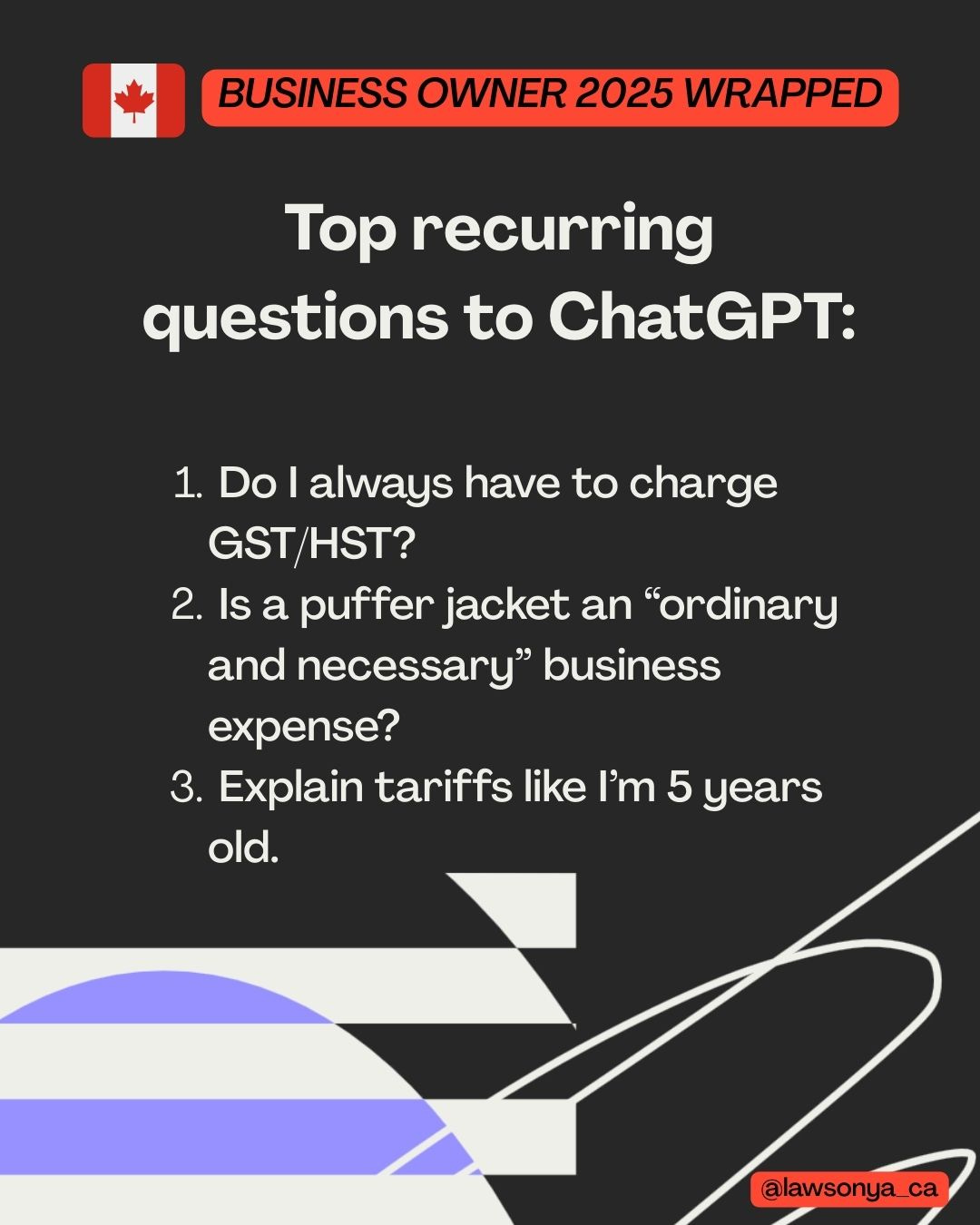
“Tariffs are like extra fees a country puts on toys or goodies coming in from other countries, so those things cost a bit more when they arrive.”
Thanks, Chat-Daddy.
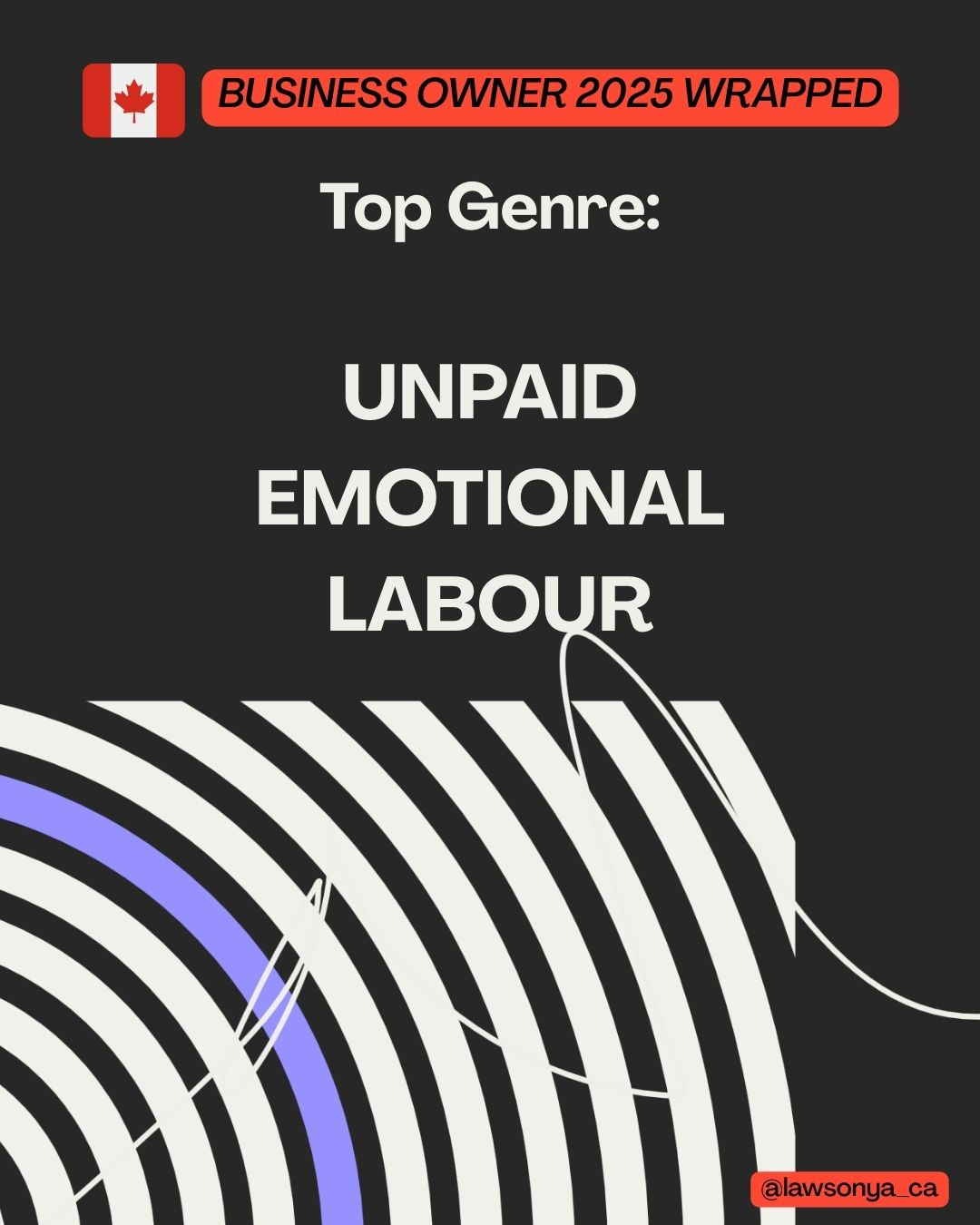
2nd genre: Late-night hoodie emails from bed at 11:47 pm
Featured artist: blue light insomnia.
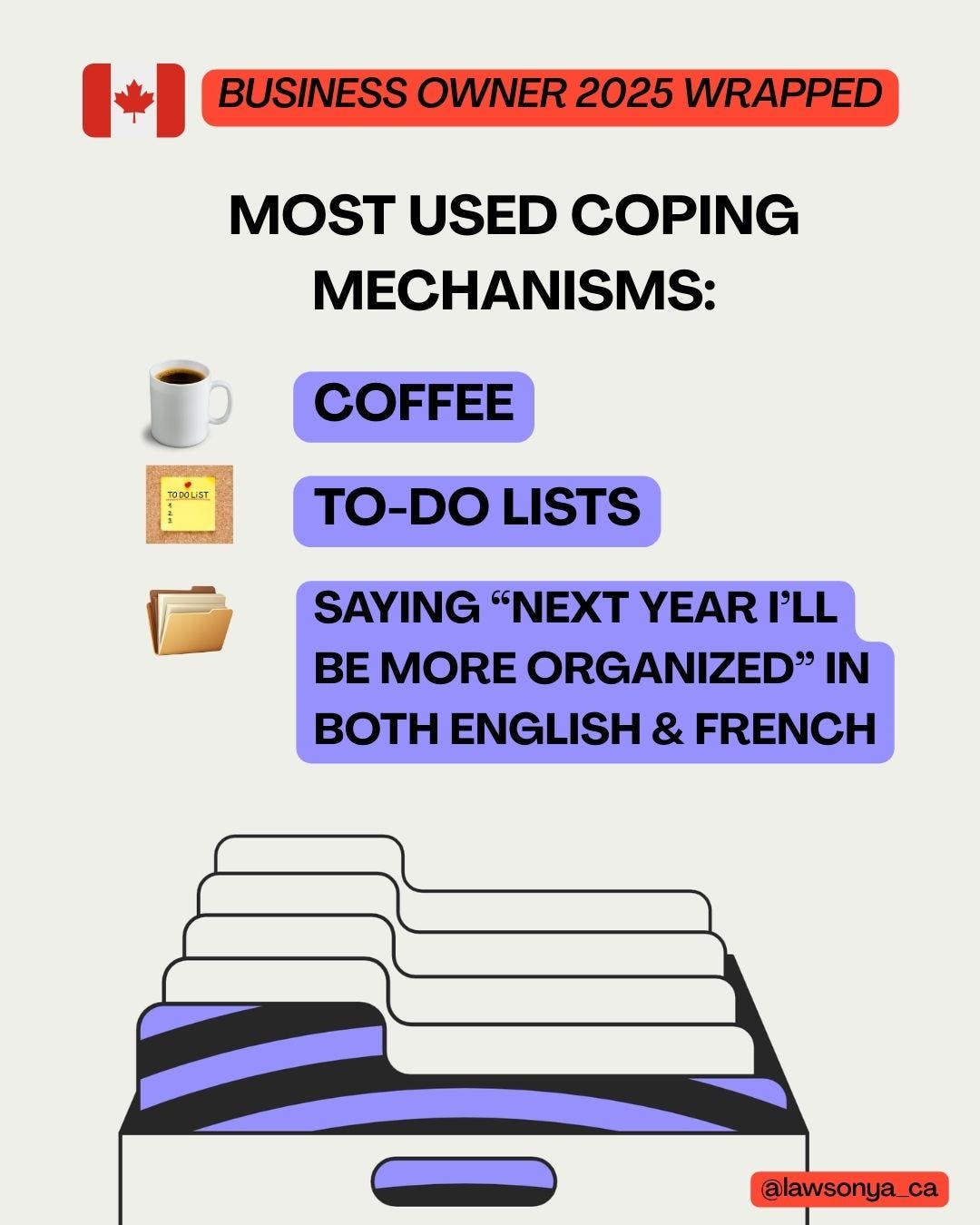
« L’an prochain, je vais être mieux organisée. »
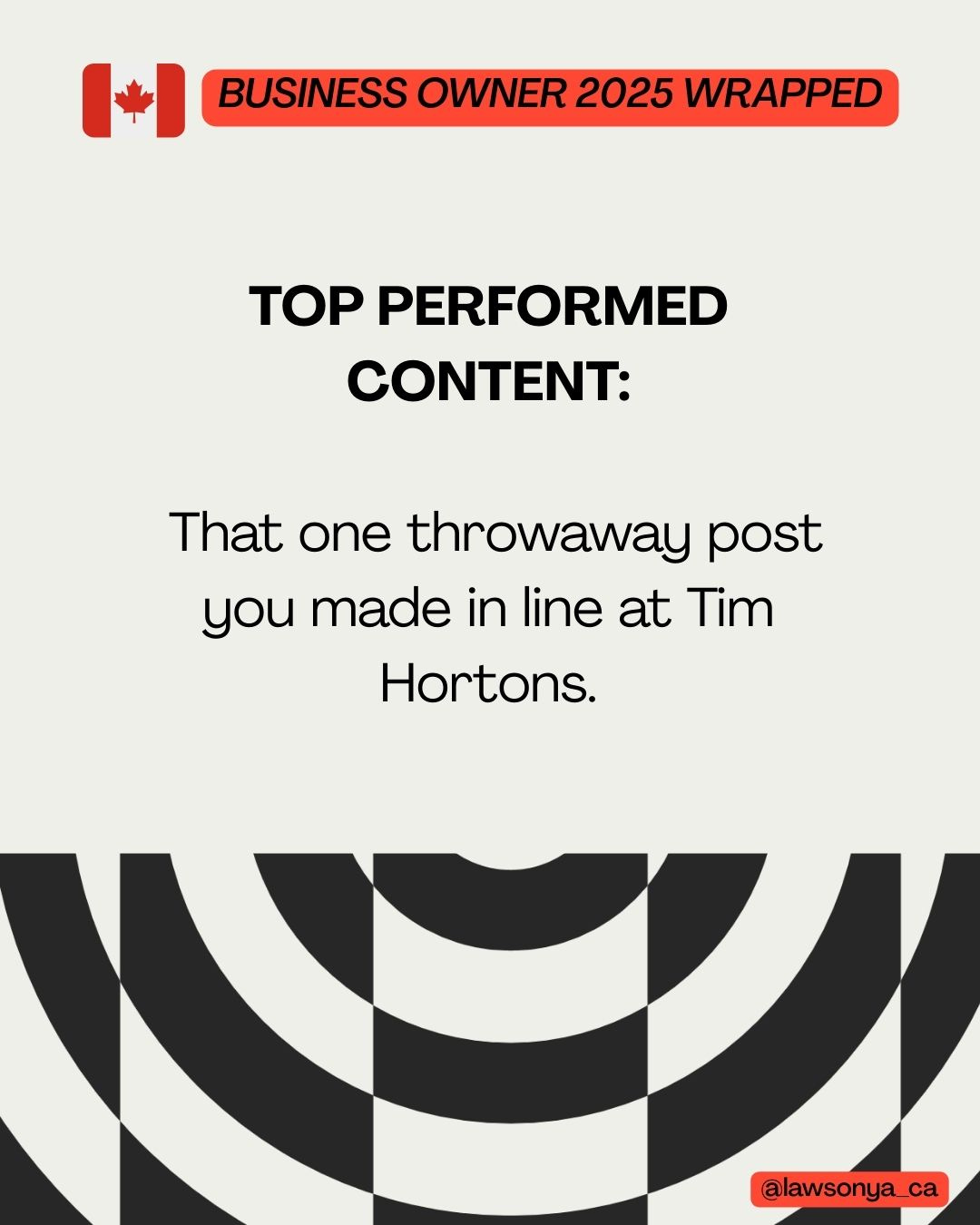
Maybe in 2026, we’ll all lean into the unpolished socials? One can hope.
If you’re like me and apprecialte the novel engery of a changing year, you may be interested in vision boards. I’m offering my vision board services to leaders who lack the time or energy to create their own.
Build smart,
Sonya
P.S. My word for 2025 was momentum, and sending out regular newsletters like this one helps me keep the momentum going!
P.P.S. How did you like this newsletter?